03.03.2015
"There are theatre artists and then there are artistic personalities such as Milja Sarkola, whose life is transformed into theatre and develops the grammar of theatre further."
Theatre critic Maria Säkö referring to Milja Sarkola’'s new work Jotain toista (Something else) in Helsingin Sanomat 21 Feb 2015.
Milja Sarkola: I direct, write, think
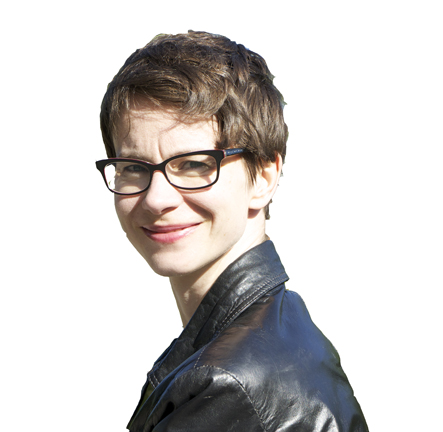
I’m a theatre director by profession. I think about and for the stage every day. When I write, I always write directly for the stage, with the stage in mind. The topic that dogs me is performing and perfomance, both on the stage and in life. Roles, authenticity, honesty, artificiality, falsehood, hypocrisy, self-betrayal. I have grown up in the wings of the theatre; my father was an actor. The theatre has always been present in my life, whether I wanted it or not. My relationship to actors is very charged. I admire their work, I revel in their fun, articulate company.
I’m more creative and inventive when I direct than when I write. When I write, I set some sort of truth as a requirement for myself. I want to believe what I’m writing. And not just believe; I want it to be true and accurate. True and accurate in terms of my observations and experiences. Linguistically true and accurate. And I try to avoid the emergence of form as long as possible. I strive to remain in my observations and experiences as long as possible. I feel that text forms (rhythm, repetition, sentence structure, speaker’s attitude, etc.) that emerge too early lock in and narrow the text.
As a director, I have more choices. Another person’s creativity, truth, and perceptions add meaning to the text and the stage. As a writer, I act alone. I have no one to refer to, no one to seek inspiration from. I can find momentary inspiration in other texts, music, movies, and images, but that is only dodging the real work at hand, which is recording my own thinking. For me, writing is thinking, and I can’t write text that is any more intelligent, creative, cultured, bold, or deep than I’m capable of thinking. I can fool myself by quoting and citing and commenting. The brutality of writing lies in that, time and again, you have to accept the limitedness of your recurring themes and sentence structures and stylistic devices and thinking.
Of course you are faced with the same limits as a director, too. But the result of the work is not solely my responsibility. When I’m directing my own text, I strive primarily to listen to and react to what is happening around me. (When I direct others’ texts or from premises other than those of an existing text, my role as a director is of course more active than when directing a text of my own.) As a conscientious person, I do make plans, I plan various starting points and try to define ways of working in advance. But in practice, in rehearsal situations, my direction is, for the most part, reactive. It’s hard for me to accept an authoritarian process and hierarchies when I work in a group. I’m not capable of it myself. I can’t force an actor.
The entire article published in TINFO News – New Modes of Authorship, 2013.
View the e-publication.
Milja Sarkola (b. 1975) is a freelance theatre director and playwright. She received a master’s degree in theatre and drama from the Theatre Academy Helsinki in 2006.
Key works:
Jotain toista (Something else), Q-Theatre, 2015, text and direction, I taket lyser stjärnorna, Lilla Teatern, 2012, dramaturgy and direction. Perheenjäsen (The Family member), Teatteri Takomo 2011, text and direction (won the 2012 Thalia prize for play of the year). In Human Disguise, direction, Zodiak Center for New Dance 2009 (won the Prix Jardin d'Europe 2012 choreography prize). Sarkola was artistic co-director of Teatteri Takomo with Pauliina Feodoroff, 2009-2012.